

How to Start a Go Kart Track Business in India: A Complete Business Plan Guide
06 November 2026
5 Min Read
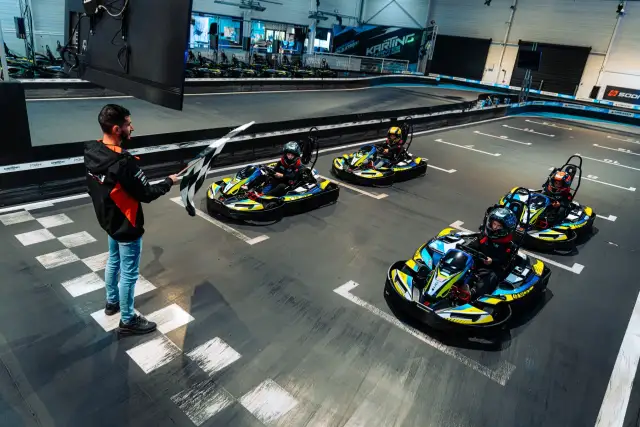
Starting a go-kart track business in India requires a clear business strategy, suitable infrastructure, and an understanding of your target market. With growing interest in recreational entertainment among families, young adults and corporate groups, go-karting presents an opportunity within India's leisure and entertainment industry.
However, establishing a successful facility involves more than purchasing go-karts and building a racing circuit. You need to evaluate land requirements, go-kart track design, equipment, safety measures, licences, staffing, and operating costs before investing.
A well-structured go-kart track business plan helps you assess the feasibility of your project, estimate investment requirements, and develop a sustainable revenue model.
This guide explains how to start a go-kart business in India, covering the essential steps involved in planning, setting up and managing your facility.
Why Start a Go-Kart Business in India?
A go-kart business can cater to several customer segments, including families, tourists, students, corporate teams and motorsport enthusiasts. Depending on your investment capacity and business objectives, you can establish a standalone racing facility or integrate a track into a larger Family Entertainment Centre (FEC).
A standalone facility focuses primarily on racing experiences, whereas an integrated entertainment centre allows customers to enjoy multiple recreational activities under one roof.
You can generate revenue through:
- Individual go-kart racing sessions
- Group and family packages
- Corporate team-building events
- Birthday parties and private bookings
- Memberships and loyalty programmes
- Organised racing competitions
The right business model depends on your location, available space, target audience, and investment budget.
How to Create a Go Kart Track Business Plan?
A go kart track business plan should outline your target market, infrastructure requirements, initial investment, revenue streams and operating expenses. These elements help you determine whether your proposed facility is commercially viable.
Consider the following areas when preparing your business plan.
1. Conduct Market Research
Begin by assessing the demand for go-karting in your proposed location. Research existing go-kart tracks in India, particularly those operating in your target city and surrounding areas.
Evaluate their pricing, track facilities, customer reviews, operating hours, and additional entertainment services. This will help you identify market gaps and opportunities to differentiate your facility.
You should also define your target audience. Families may prefer recreational racing experiences, while corporate groups and motorsport enthusiasts may look for organised events and competitive sessions.
2. Estimate Your Initial Investment
Your investment will depend on factors such as land availability, track dimensions, construction requirements, equipment selection, and customer facilities.
Include the following expenses in your financial projections:
- Land purchase or lease
- Track construction and surface preparation
- Go-kart procurement
- Safety barriers and protective equipment
- Lighting and electrical infrastructure
- Pit area and maintenance workshop
- Reception, waiting areas and parking
- Licences, approvals and insurance
- Employee salaries and marketing
You should also maintain sufficient working capital to cover recurring expenses during the initial operating period.
For example, if your estimated monthly operating expenses are ₹5 lakh, maintaining three months of working capital would require an additional ₹15 lakh.
3. Develop a Revenue Model
Your revenue model should account for different customer segments and booking opportunities. Individual racing sessions can form your primary revenue stream, supported by group packages, corporate bookings, memberships, and special events.
For example, if your facility sells 60 rides daily at ₹500 per session and operates 26 days a month, the estimated monthly gross revenue would be ₹7.8 lakh.
This is a revenue illustration, not a profit estimate. Your actual profitability will depend on customer demand, operating costs, maintenance, staffing, and equipment utilisation.
How to Choose the Right Location for a Go-Kart Track Setup?
Location plays an important role in determining customer accessibility, operating expenses and long-term business potential.
When evaluating a property, consider:
- Accessibility: Choose a location with convenient road connectivity and access to your target customer base.
- Land availability: Ensure sufficient space for the racing circuit, safety zones and supporting infrastructure.
- Surrounding developments: Proximity to shopping centres, residential areas, tourist attractions and entertainment destinations can improve visibility.
- Parking: Provide adequate parking for individual visitors and larger groups.
- Local demand: Evaluate the presence of families, students, corporate offices and other potential customer segments.
You can choose between two primary formats when planning your go-kart track setup.
Indoor Go-Kart Tracks
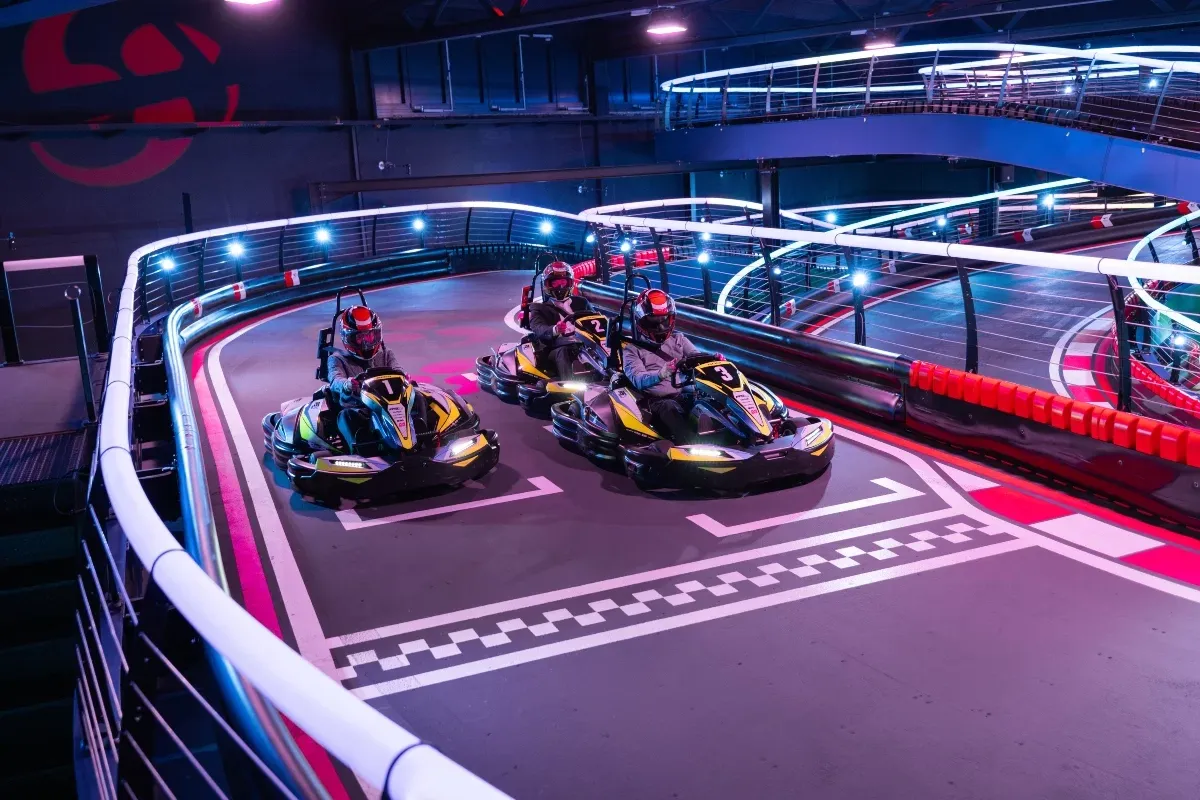
Indoor tracks operate within covered buildings and are suitable for shopping centres, entertainment complexes and dedicated recreational facilities.
They offer protection from external weather conditions and can provide more consistent operating schedules. However, you need to consider ventilation, building layout, fire safety and electrical requirements.
Outdoor Go-Kart Tracks
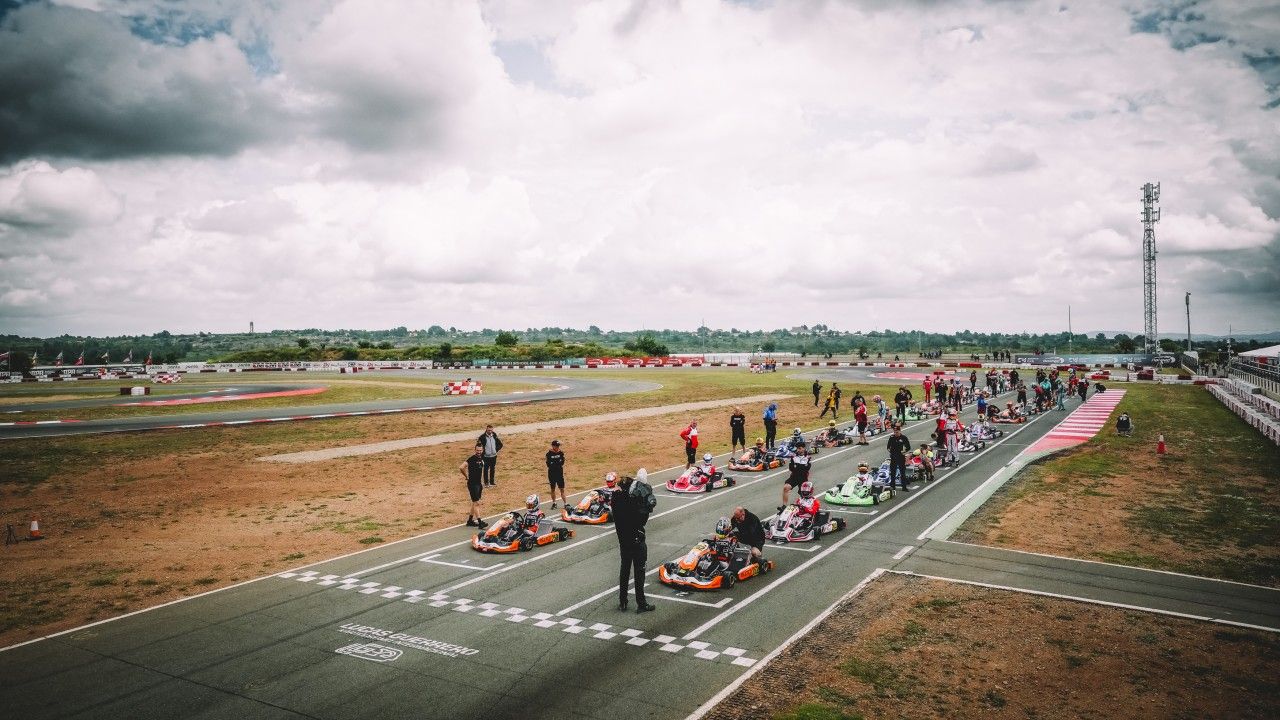
Outdoor tracks offer greater flexibility in circuit dimensions and layout. They can accommodate different track configurations and provide an open-air racing experience.
However, rainfall, extreme temperatures and other weather conditions may affect operations. You should also account for drainage, outdoor lighting and weather-resistant infrastructure.
Before purchasing or leasing land, consult a professional track designer to evaluate the available space and prepare a suitable circuit layout.
What Equipment Do You Need to Start a Go-Kart Business?
Selecting appropriate equipment is essential for operational efficiency, customer experience and safety. Your requirements will depend on the track format, expected visitor numbers and type of racing experience you intend to offer.
1. Go-Karts
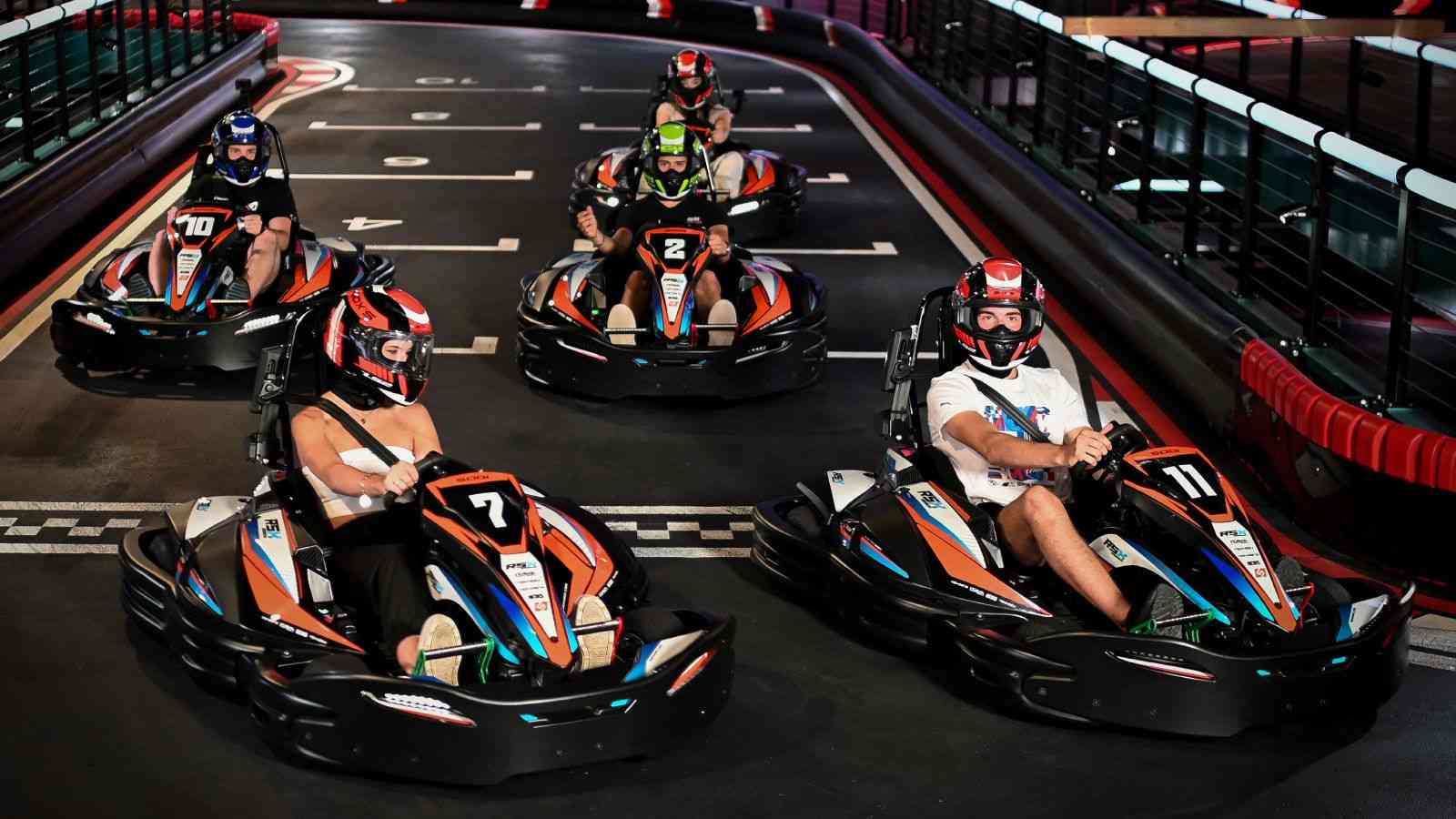
You can choose between electric and petrol-powered go-karts depending on your track format and operational requirements.
Electric Go-Karts: These produce no exhaust emissions during operation and generally operate with less noise, making them suitable for indoor facilities. However, they require charging infrastructure and battery management.
Petrol Go-Karts: These offer a conventional racing experience but require regular engine servicing, fuel management and appropriate ventilation.
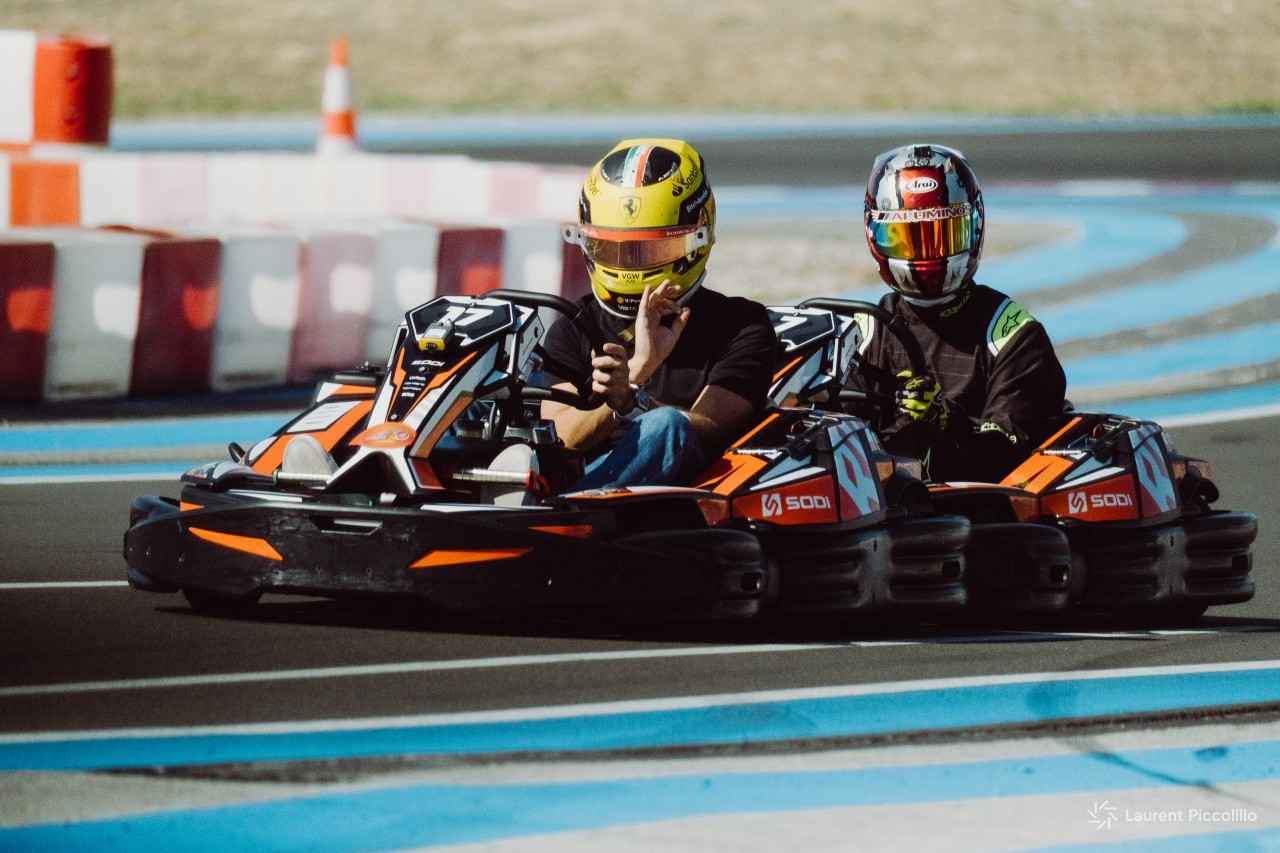
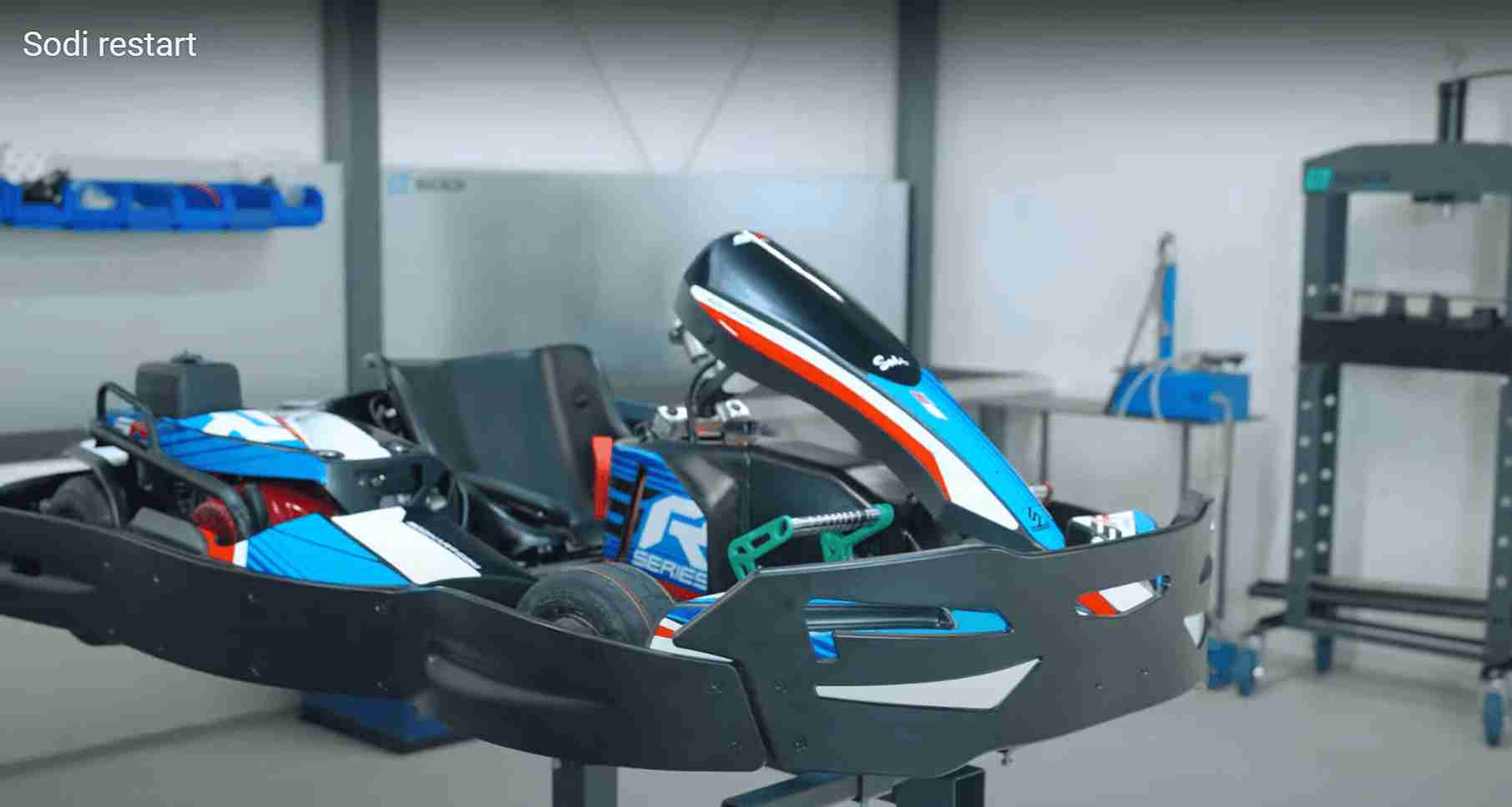
For reliable commercial go-karting solutions, CSML Group distributes Sodikarts, a renowned international brand from France offering go-karts for professional and recreational racing facilities. Explore CSML Group's Sodikart range to find suitable solutions for your facility.
2. Safety Equipment and Barriers
Safety should be considered throughout the track design and equipment selection process.
Your facility may require helmets, seat belts, protective barriers, warning signs, first-aid facilities and emergency response equipment, depending on the vehicle and track specifications.
Establish inspection procedures and ensure that employees are trained to manage customer safety and emergency situations.
360 Karting barriers are engineered with advanced Energy Transfer and Absorption Technology (ETAT), designed to absorb and distribute impact forces, helping protect drivers and minimise go-kart damage during collisions. Built for exceptional durability, flexibility and easy maintenance, these high-performance barriers also prevent dangerous rebound effects and help maintain safer, smoother and more efficient track operations.
When selecting go-kart safety equipment, you should also evaluate applicable safety standards, including EN 16230-1 for leisure karts and EN 16230-2 for leisure karting facilities. Check the manufacturer's technical documentation to verify the relevant safety requirements and compliance for your chosen equipment.
3. Lap Timing Systems
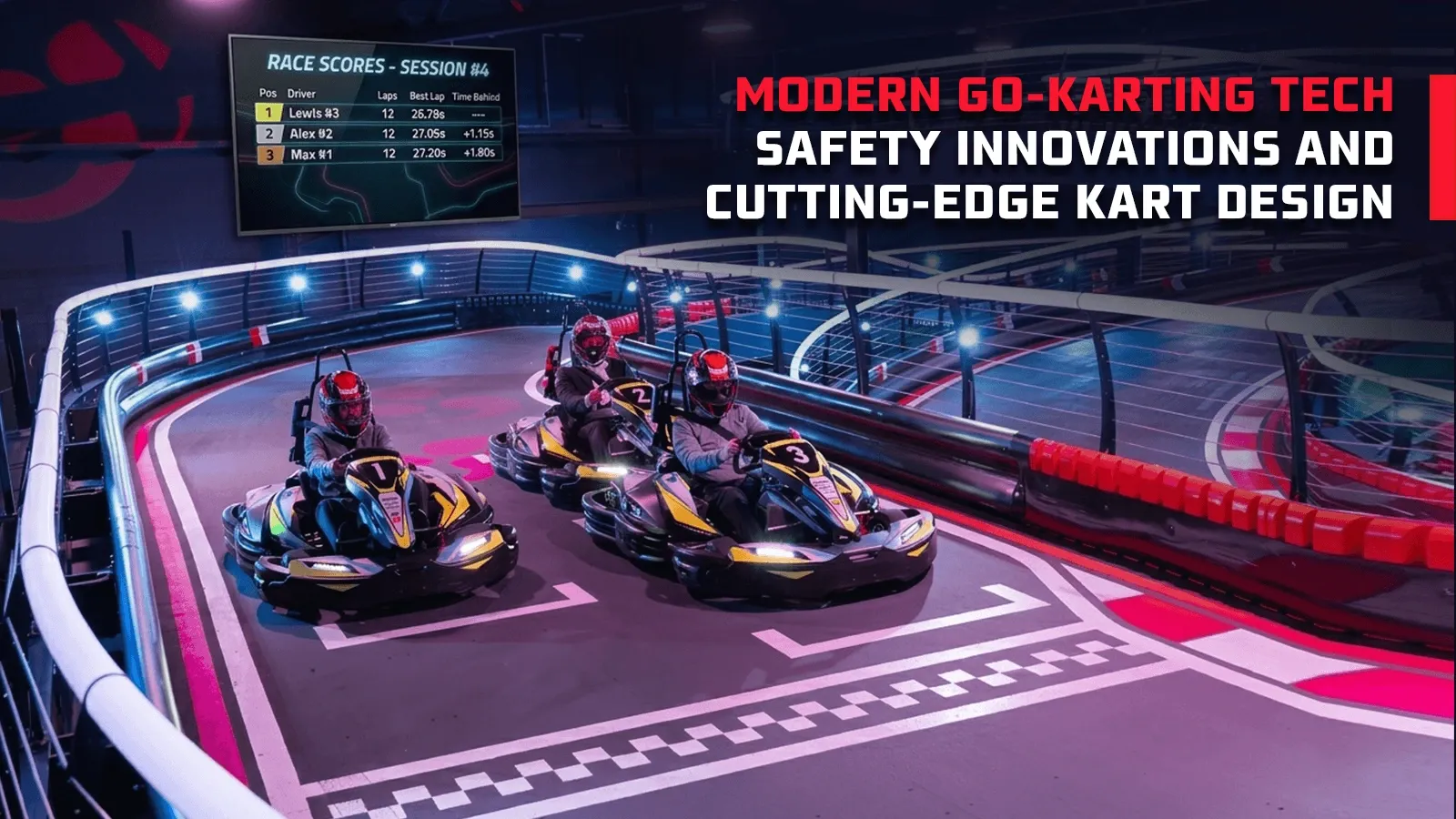
Digital timing systems record lap times and display individual racing performance. They enhance the customer experience through leaderboards, race rankings and organised competitions, encouraging repeat visits.
CSML Group offers RaceFacer, a karting timing and race management software solution that helps facilities manage racing sessions, track lap times and display race results.
4. Maintenance Equipment and Spare Parts
A dedicated maintenance workshop helps your team inspect, service and repair go-karts.
Maintain essential spare parts and appropriate tools to minimise downtime. Your maintenance inventory should reflect the vehicle models and components used at your facility.
How to Manage a Go-Kart Racing Business?
Once your facility is operational, efficient management becomes essential for maintaining service quality, equipment performance and customer satisfaction.
Your daily operations should cover the following areas.
Staffing and Employee Training
Depending on the size of your facility, you may require:
- Track marshals to supervise racing sessions
- Mechanics to inspect and maintain go-karts
- Reception staff to manage registrations and bookings
- Operations managers to oversee daily activities
Employees should understand operating procedures, customer instructions and emergency response responsibilities.
Regular Equipment Maintenance
Establish a preventive maintenance schedule covering brakes, steering, tyres, engines or battery systems, depending on your fleet.
For example, maintaining individual service records for a fleet of 10 go-karts helps you monitor repairs, track servicing frequency and identify recurring equipment issues.
Booking and Customer Management
A digital booking and payment system can simplify reservations, manage customer information and reduce manual administration.
You can also introduce advance bookings for corporate events, birthday parties and group sessions. However, staff supervision and appropriate checks should remain part of every racing session.
Why Choose Turnkey Go-Kart Track Solutions for Your Business?
Setting up a go-kart track involves several technical aspects, from circuit planning and safety systems to equipment installation. Working with an experienced solution provider can simplify the process.
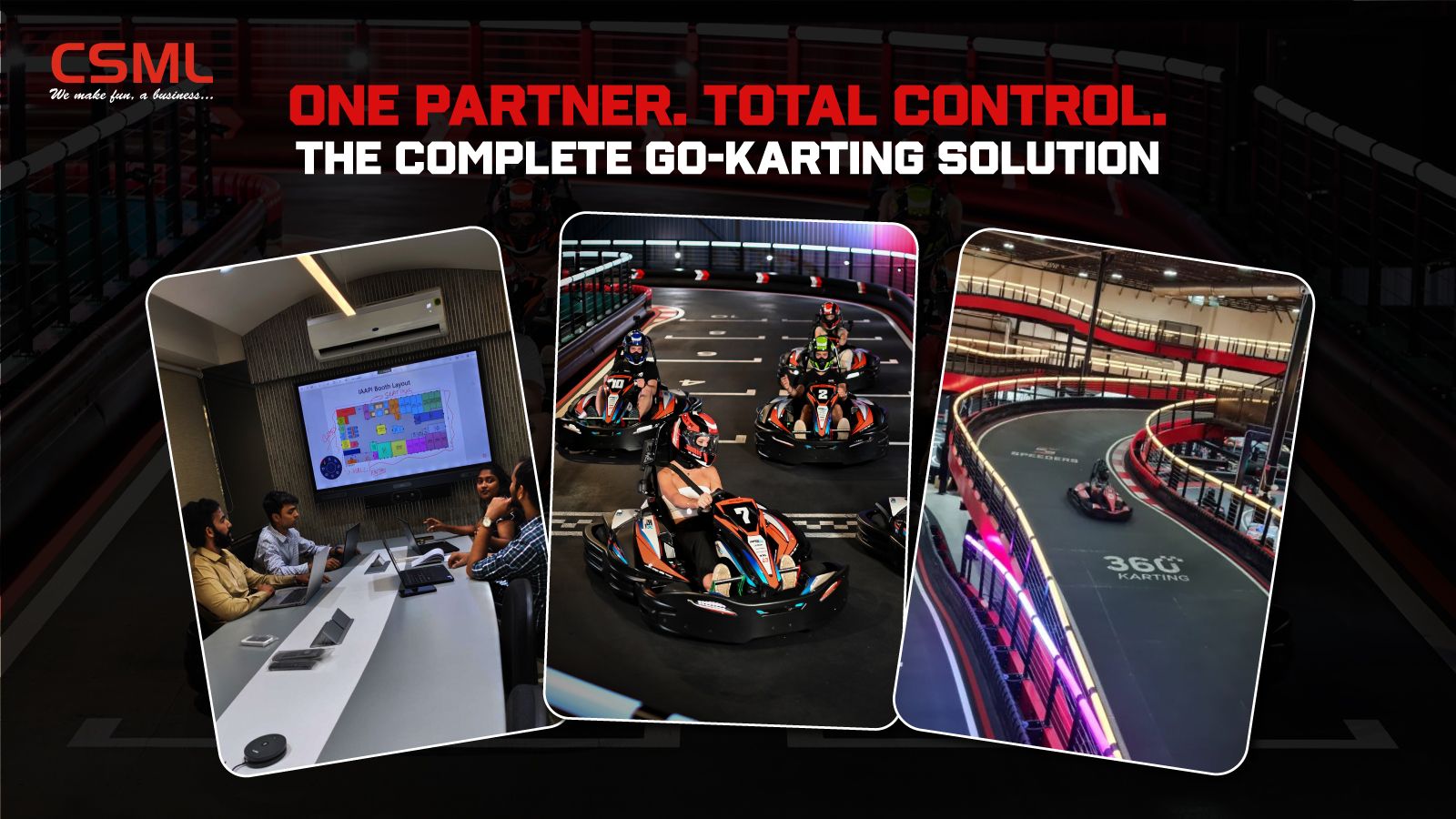
CSML Group is an exclusive partner of 360 Karting from Slovenia and offers end-to-end turnkey go-kart track solutions in India. These services cover concept development, 3D track design, safety barrier systems and complete equipment installation for indoor and outdoor facilities.
CSML Group offers three track concepts to suit different business models: 360 Rental, designed for timed recreational driving and higher customer throughput, 360 Race, developed for competitive racing experiences and 360 Ride go-kart track business model that offers the most accessible way to enjoy karting. These concepts help investors select a track format based on their target audience, available space and operational objectives.
Whether you are planning a standalone racing facility or adding go-karting to a Family Entertainment Centre, CSML Group can help transform your concept into an operational racing venue.
Torq03 Partners with Global Karting Brands to Bring International Standards to India
On 8 April 2026, Torq03 announced a strategic collaboration with Sodikart (France), 360 Karting (Slovenia) and CSML Group (India) to bring internationally benchmarked karting technology to India. This partnership will be part of Torq03's upcoming state-of-the-art karting facility at Embassy Manyata Business Park in North Bengaluru. The facility aims to set new standards for premium karting experiences and indoor entertainment in India.
Launching a go-kart track in India takes careful planning across market research, location, equipment, safety and day-to-day operations, and getting each of these right is what turns a racing circuit into a sustainable business. CSML Group supports this journey with Sodikarts and RaceFacer timing software, giving new and established facilities the tools to deliver safe, exciting and repeatable racing experiences.